Living in the Sunshine State means we have access to some of the best waterways in the world, but it also means our boats are constantly under attack. If you own a boat here, you know that rust and oxidation are enemies that never sleep.
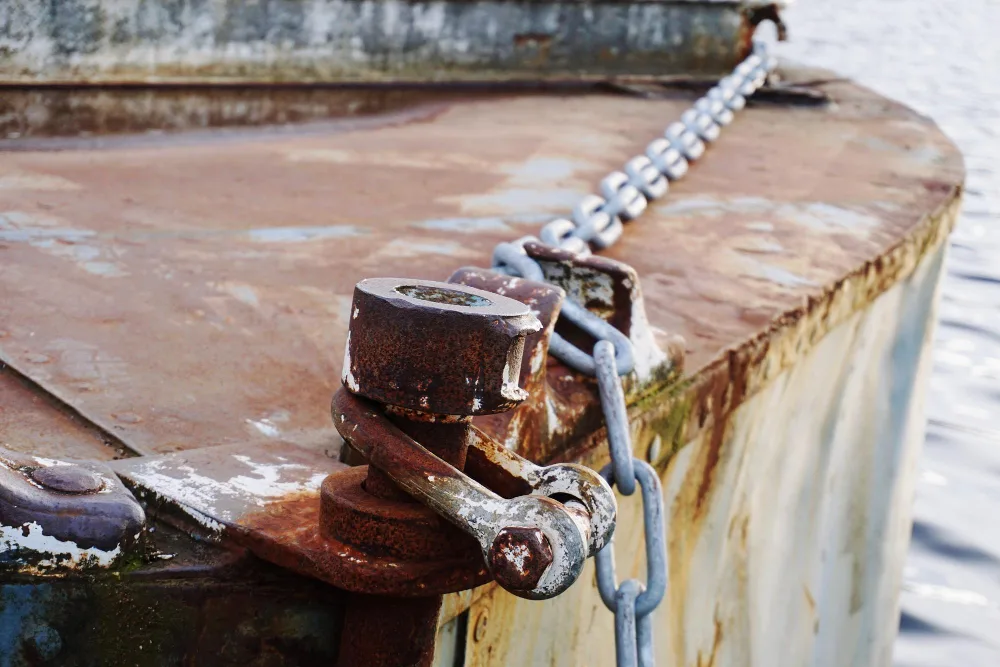
Salt air, high humidity, and scorching sun create a perfect storm for eating away at your vessel's metal components. It isn’t just an aesthetic issue; it's a safety hazard that can weaken structural integrity and lead to expensive failures. Whether you are trailering your skiff from Winter Park to the coast or keeping a cruiser in the water full-time, staying ahead of rust is the only way to protect your investment.
What actually causes corrosion on my boat?
Corrosion happens when metal deteriorates due to a reaction with its environment, and in our case, that environment is usually salty water. It is essentially nature trying to turn refined metals back into their more stable forms.
There are a few specific types you need to watch out for:
- Galvanic Corrosion: This is the most common offender. It occurs when two different metals (like an aluminum hull and a stainless steel propeller) are connected and submerged in an electrolyte (saltwater). One metal gives up electrons to the other and starts to dissolve.
- Crevice Corrosion: This happens in tight spaces where water gets trapped and becomes stagnant, like under a bolt head or washer. The stagnant water loses oxygen, causing the metal to break down.
- Stray Current Corrosion: This is the fast-acting killer. It happens when there is a fault in your boat’s electrical system or the marina’s shore power, turning your metal parts into a battery plate that dissolves rapidly.
Why it matters: Ignoring these signs can lead to catastrophic failure. A corroded through-hull fitting can sink a boat, and a rusted steering cable can snap when you need it most. Using the right products during assembly is critical. For example, when installing hardware, applying a barrier paste like the Tef Gel - TG-12 (12oz cartridge) prevents water intrusion and stops dissimilar metals from reacting to each other.
How can I prevent corrosion effectively?
The best defense is a proactive offense, which means creating barriers between your boat’s metal and the harsh marine environment.
Wash Your Boat Carefully
Salt crystals are hygroscopic, meaning they attract moisture from the air. If you leave salt on your rails or engine, it holds water against the metal, accelerating rust. You should rinse your boat with fresh water and boat soap after every single outing.
Use Sacrificial Anodes
These are pieces of active metal (usually zinc or aluminum) attached to your boat's underwater metals. They are designed to corrode instead of your expensive engine or hull. Think of them as bodyguards taking a bullet for your boat.
Protect Your Connections
Electrical connections are prime targets for the green fuzz of corrosion. Coat your terminals and connections with dielectric grease or corrosion inhibitors. For heavier-duty applications, like mounting a motor or deck hardware, you need a heavy-duty paste. The Tef Gel - TG-16 (16oz tub) is perfect for these larger jobs, ensuring you can actually unscrew those bolts five years from now.
Corrosion prevention is about consistency. It is much cheaper to buy a tube of protective gel and some soap than to replace a lower unit on an outboard motor.
Why is the Florida environment so tough on boats?
Florida’s specific climate creates a unique set of challenges that accelerate decay faster than almost anywhere else in the country.
Extreme Humidity and Heat
In Central Florida, we deal with average summer temperatures of 90-95°F combined with 70-80% humidity. Heat speeds up chemical reactions. According to Arrhenius's law (a chemistry principle), corrosion rates can double for every 10-degree Celsius increase in temperature. This means your boat rots faster here in July than it would in Maine.
The "Lightning Capital" Factor
As noted in local data, Florida is the lightning capital of the US, averaging 25+ strikes per square mile annually. While a direct hit is rare, the atmospheric static and electrical storms common in our rainy season (June through September) can mess with sensitive electronics and electrical grounds, potentially contributing to stray current issues.
Salt Air Travels
Even if you park your boat inland in a neighborhood like Lake Nona or Oviedo, the salt air travels. Plus, the brackish water in areas like the St. Johns River still conducts electricity well enough to cause galvanic reactions.
How much does corrosion really cost boat owners?
On average, industry experts suggest you should budget 10% of your boat's value annually for maintenance and operating costs, and a significant chunk of that goes toward fighting corrosion. If you have a $50,000 center console, you are looking at $5,000 a year to keep it running and floating.
Consider the cost of a new lower unit for an outboard motor, which can easily exceed $3,000. Compare that to the cost of a $20 anode kit or a $30 tub of protective gel. The math is simple. By investing in corrosion prevention early, you're saving thousands down the road.
According to a report by NACE International, the global cost of corrosion is estimated to be $2.5 trillion, equivalent to roughly 3.4% of the global GDP. While that covers all industries, the marine sector takes a heavy hit because saltwater is one of the most aggressive natural environments on earth.
Can I fix parts that are already corroded?
You can often save parts if you catch the issue early enough, but structural damage usually requires replacement.
For surface rust on stainless steel:
- Clean it: Use a mild acid cleaner or a specialized rust remover.
- Polish it: Use a metal polish to seal the surface.
- Protect it: Apply a wax or polymer coating.
For corroded electrical wires:
- Cut it back: If the copper wire has turned black or green, corrosion has traveled up the insulation. You must cut the wire back until you find bright, shiny copper.
- Replace it: If the corrosion goes too deep, you need to replace the entire run. Tinned copper wire is the industry standard for marine use because it resists corrosion much better than bare copper.
If you see deep pitting (small holes) in your prop or through-hull fittings, do not try to patch them. These parts are under immense stress and pressure. Corrosion prevention failed in this instance, and for safety, the part must be replaced.
Ready to protect your vessel?
Boating in Florida is a lifestyle, not just a hobby. Whether you're fishing off the coast or cruising the Butler Chain of Lakes, your vessel deserves the best care to keep you and your family safe. Don't let a small spot of rust turn into a hole in your hull.
If you need high-quality anodes, protective gels, or advice on the best corrosion prevention strategies for your specific boat, we are here to help.
Contact Jupiter Boat Supply today at (561) 320-3522.