Salt air in Florida eats metal for breakfast. As marine technicians, we see small spots of rust turn into catastrophic failures within months if ignored. Catching these signs early saves clients thousands in repairs and keeps vessels safe. Here is how you can spot corrosion before it ruins a vessel.
Why Does Florida's Climate Accelerate Corrosion?
Florida's high humidity, averaging over 70% year-round, combined with high salinity in the Atlantic Ocean, creates the perfect storm for oxidation. This environment accelerates chemical breakdown on aluminum and stainless steel components up to 10 times faster than inland areas. Understanding this aggressive cycle helps technicians predict where failures happen first.
The science is simple but ruthless. The warm, salty air acts as an electrolyte. This bridges the gap between dissimilar metals, kickstarting galvanic corrosion instantly. In our experience, boats docked near the Jupiter Inlet or down the Intracoastal face higher salinity levels due to strong tidal flow.
If you don't address this immediately during assembly or repair, you're setting the customer up for failure. We always recommend isolating dissimilar metals. A small investment in a blocking agent like Tef Gel - TG-.25 (3cc tube) stops this reaction cold. It separates the metals and prevents the seizure of stainless screws in aluminum masts. A $20 tube can save a $5,000 lower unit.
What Are the First Visual Signs of Failure?
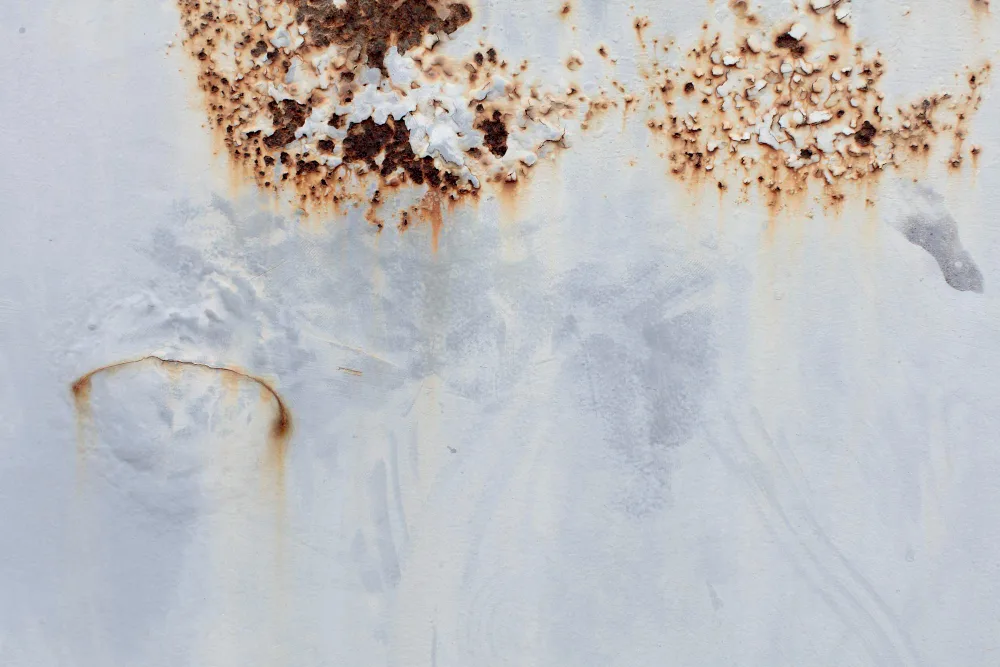
Look for blistering paint, white powder deposits on aluminum, or "weeping" rust stains near stainless steel fasteners. On HVAC units, discoloration on the coils often signals the start of galvanic corrosion. These subtle changes usually appear 3-6 months before structural integrity is compromised, giving you a small window to act.
Don't just look at the obvious spots. Check the hidden areas:
- Surface Pitting: Run your hand over propeller shafts and through-hulls. If it feels rough like sandpaper, corrosion has started.
- Bubbling Paint: This usually means moisture has trapped salt against the metal underneath. We see this often on aluminum towers in Tequesta.
- Discoloration: Dark spots on stainless steel rigging are not just dirt. That is the passivation layer breaking down.
Early detection is the cornerstone of effective corrosion prevention US marine standards emphasize. If you catch the white powder on an outboard bracket now, you can sand and seal it. Wait six months, and you might be replacing the whole bracket.
How Do You Inspect Internal Components?
Use ultrasonic thickness gauges to check fuel tanks and hull plates without removing them. For riggings and tight spaces, a borescope allows you to see hidden corrosion behind bulkheads. Non-destructive evaluation (NDE) saves time and reveals issues that naked-eye inspections miss, often catching 90% of internal defects.
We recently inspected a sportfish in North Palm Beach that looked pristine on the outside. However, the ultrasonic test revealed the aluminum fuel tank had lost 40% of its wall thickness on the bottom. The baffle welds were corroding from the inside out due to trapped water.
Technicians should also physically disassemble high-load components annually. When you pull bolts for inspection, coat them before reinstalling. For larger projects like re-rigging outboards or assembling T-tops, a larger supply like the Tef Gel - TG-1 (20cc tube) is standard in our toolkits. It’s waterproof and doesn't wash away, meaning you won't be drilling out snapped bolts next season.
How Can You Learn from Regional Failures?
Tampa and Miami offer harsh lessons in what happens when maintenance slides. In Tampa, industrial facilities near the bay reported a 15% increase in structural steel failures last year due to salt fog. In Miami, a marina condo collapse was traced back to rebar corrosion that went unnoticed for a decade.
For us in the marine industry, these examples prove that visual checks aren't enough. A study of boats in South Florida showed that 60% of "sudden" equipment failures had visible warning signs for at least a year prior.
We saw a similar case recently with a center console kept on a lift. The owner thought rinsing the hull was enough. But the salt spray accumulating inside the cowling corroded the wiring harness. The engine failed 10 miles offshore. A simple "corrosion prevention US" standard protocol—spraying the powerhead with a corrosion inhibitor every 30 days—would have prevented a $3,500 tow and repair bill.
What Maintenance Strategies Extend Equipment Life?
Implement a rigorous freshwater flush schedule and apply dielectric grease to all electrical connections. Protective coatings like ceramic sprays can extend the life of aluminum towers by 3-5 years. Regular cleaning cycles remove salt crystals before they bond to the surface, making them the most effective form of prevention.
Here is the checklist we use for clients:
- Freshwater Rinse: Every single time the boat is used. No exceptions.
- Chemical Flush: Run a salt-removing agent through the engines every 30 days.
- Barrier Protection: Wax hull surfaces every 3-4 months.
- Anode Check: Inspect zincs monthly. If they are 50% wasted, replace them immediately.
By following these steps, you meet the strict requirements for corrosion prevention US manufacturers demand for warranty claims. You also build trust with your customers because their boats look better and run longer.
Start Proactive Monitoring Today
New safety standards coming in 2026 will require stricter logs for structural inspections on commercial vessels. Start practicing these habits now. Catching a $50 seal leak today prevents a $15,000 engine rebuild tomorrow. It’s about keeping our local fleet on the water and out of the shop.
Need to stock up on prevention supplies? Reach out to Jupiter Boat Supply at (561) 320-3522. We’ll get you the right products to fight the salt.