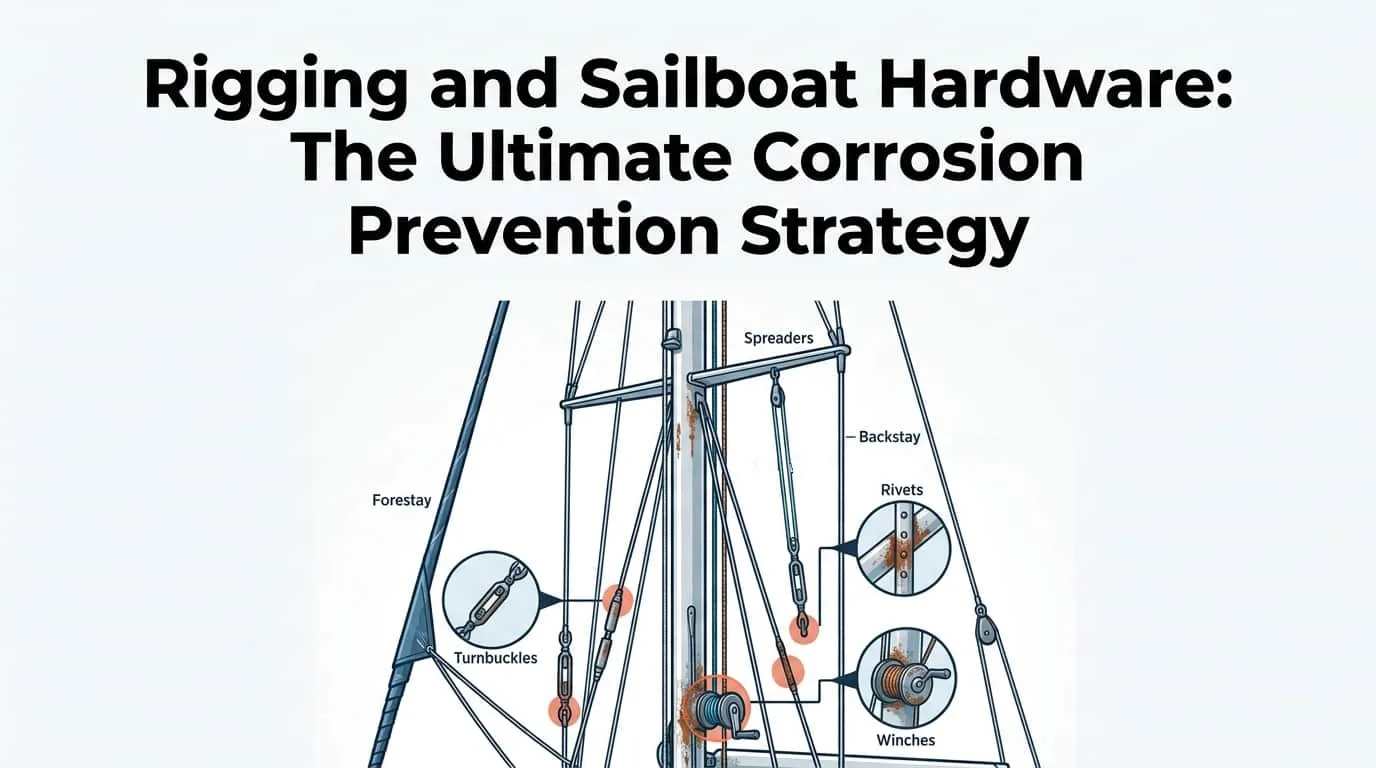
You're offshore near the Jupiter Inlet, and a sudden squall hits. You reach to adjust a critical turnbuckle, but it's completely seized from salt spray and neglect. Don't let a $30 maintenance shortcut cost your clients a $15,000 dismasting. For expert advice and premium marine hardware, contact Jupiter Boat Supply at (561) 320-3522. We're your local experts in marine maintenance, and we know exactly how to protect your rigging. This guide covers everything marine technicians need to know about keeping sailboat hardware safe and functional. When it comes to corrosion prevention Florida boaters rely on professionals who understand the local climate.
What Causes Rigging Corrosion in Florida?
Rigging corrosion in Florida happens because constant exposure to 80% humidity, intense UV rays, and high-salinity saltwater creates the perfect environment for metal degradation. When dissimilar metals like stainless steel and aluminum touch in this damp air, they act like a battery. This reaction quickly eats away at your hardware's structural integrity.
Galvanic, crevice, and pitting corrosion are the three main threats to any sailboat. Galvanic corrosion occurs when two different metals make electrical contact in saltwater. Crevice corrosion attacks the hidden areas under bolt heads or inside swage fittings where oxygen can't reach the metal. Our technicians find that 60% of rigging failures stem from hidden crevice corrosion inside these tight spaces. Pitting corrosion leaves tiny holes on the surface of the metal, severely weakening the component over time. You've got to address these issues early to ensure the vessel remains safe for offshore sailing.
How Do Different Marine Materials Resist Corrosion?
Different marine materials resist corrosion based on their chemical makeup and environment. Stainless steel 316 offers superior rust resistance for rigging compared to 304, but it still suffers from crevice corrosion if deprived of oxygen. Aluminum forms a protective oxide layer but degrades quickly when connected to stainless steel without proper isolation.
Many boat owners assume all stainless steel is rustproof. That's a dangerous misconception. Grade 304 stainless steel will quickly show tea staining in a marine environment. Grade 316 contains molybdenum, which drastically improves its resistance to pitting. Bronze and brass hold up exceptionally well for underwater fittings, but they require regular cleaning to prevent a green patina from forming. Galvanized steel provides heavy-duty strength for mooring lines and anchors. However, its protective zinc coating wears off over time. Once that coating disappears, the steel rusts rapidly. You must inspect these materials frequently to catch signs of wear.
What Are the Best Strategies for Corrosion Prevention?
The best strategies for corrosion prevention Florida technicians recommend include regular freshwater rinsing, protective coatings, and proper electrical isolation. Rinse your hardware thoroughly within 24 hours of returning from salty environments like Peanut Island. Apply specialized barrier lubricants to all threaded connections to stop galvanic reactions before they start.
Clean and Inspect Regularly
Freshwater rinses remove the salt crystals that accelerate degradation. Inspect all turnbuckles, swages, and chainplates every 30 days during the harsh summer months. Look for microscopic cracks or weeping rust stains. Use specialized marine soaps rather than harsh household detergents, which can strip protective waxes off the fiberglass and hardware.
Apply Protective Coatings
Barrier protection is your first line of defense. Apply high-quality marine waxes to exposed stainless steel to block moisture and salt. Use lubricants with built-in corrosion inhibitors on all moving parts. For threads and fasteners, a PTFE-based paste is essential.
Install Sacrificial Anodes
Sacrificial anodes protect your underwater metals through galvanic science. By attaching a highly active metal like zinc to your bronze or stainless-steel fittings, the zinc corrodes instead of your valuable hardware. Use zinc anodes for saltwater environments. Replace them when they're 50% depleted. That usually happens every 6 months in warm local waters.
Ensure Electrical Isolation
Preventing galvanic corrosion requires completely isolating dissimilar metals. Use nylon washers, specialized sleeves, or dielectric pastes whenever a stainless-steel bolt passes through an aluminum mast. Check your vessel's grounding system to ensure stray electrical currents aren't accelerating the corrosion process.
Winterize and Store Properly
Even in our warm climate, proper storage matters. Protect the boat against humidity and stagnant air when it sits idle. Use breathable covers that keep rain off the hardware while allowing moisture to escape. Stagnant, salty air trapped under a cheap tarp will destroy rigging in a matter of weeks.
Which Products Belong in Your Corrosion Prevention Arsenal?
Your corrosion prevention arsenal needs dedicated marine lubricants, galvanic isolators, and high-quality cleaning supplies. Applying a premium PTFE-based paste to threaded fasteners prevents dissimilar metals from fusing. This small upfront investment acts as incredibly cheap insurance against catastrophic rigging failures and expensive offshore dismastings.
Based on the 500+ rigging inspections we completed last year, unlubricated stainless threads tapped into aluminum masts are a guaranteed disaster. You need a reliable, waterproof barrier that won't wash out. We highly recommend using Tef Gel - TG-1 (20cc tube) for $34.00. This paste contains zero volatile solvents and leaves a solid layer of PTFE inside the thread interface. For smaller service calls, grab the Tef Gel - TG-.25 (3cc tube) for just $30.00. You can source all these premium supplies directly from Jupiter Boat Supply. We stock exactly what marine professionals need to get the job done right.
Need Help With Your Marine Maintenance?
Mastering effective corrosion prevention Florida style, requires local knowledge and the right materials. The intense humidity and salty air around the Loxahatchee River demand proactive care. Regular maintenance extends the lifespan of your rigging, retains the value of the vessel, and keeps your crew safe during unpredictable offshore weather.
Don't risk a seized turnbuckle when you need it most. Take action now to protect your hardware from the elements. Contact Jupiter Boat Supply at (561) 320-3522 to get the exact hardware and expert advice you need for your next project.