If you are searching for how to stop galvanic corrosion between stainless and aluminum on a boat, the answer starts before corrosion ever appears. Whenever stainless steel and aluminum are in direct contact in a saltwater environment, galvanic corrosion can begin. Applying a protective barrier such as Tef Gel at every metal junction helps prevent corrosion, reduces galling, and makes future hardware removal much easier. Experienced captains know that preventing corrosion is far less expensive than replacing seized hardware.
If you are unsure which product fits your project, contact Jupiter Boat Supply for expert guidance or call (561) 320-3522. Choosing the correct Tef Gel size now can help protect your hardware for years to come.
Saltwater is relentless. Even a carefully maintained boat develops corrosion if dissimilar metals remain in contact without protection. Boat owners frequently discover seized fasteners only after attempting routine maintenance, turning a simple repair into a much larger project.
Marine technicians understand that corrosion rarely appears overnight. It develops gradually inside threaded connections, beneath hardware, and between metal surfaces where moisture remains trapped. By the time white oxidation or frozen bolts become visible, damage has often been progressing for months.
Why stainless steel and aluminum create problems together
Galvanic corrosion occurs whenever two different metals touch while an electrolyte such as saltwater completes the electrical path.
In this combination, aluminum becomes the more vulnerable metal.
As corrosion develops, oxidation forms between the surfaces. Fasteners become increasingly difficult to remove, threads deteriorate, and hardware may eventually seize completely.
The problem affects countless marine components, including:
- T-top fasteners
- Aluminum towers
- Radar mounts
- Hinges
- Rail bases
- Deck hardware
- Electronics brackets
Removing seized stainless fasteners from aluminum can become one of the most frustrating maintenance jobs on a boat.
Why galling makes the problem even worse
Corrosion is only part of the issue.
Stainless steel fasteners can also gall.
Galling occurs when metal surfaces bind together under pressure during installation or removal. Once this happens, the fastener may lock into place before reaching proper torque, or refuse to come out without damage.
When corrosion and galling occur together, removing hardware often requires drilling, cutting, or replacing surrounding components.
That repair usually costs far more than preventing the problem during installation.
Why Tef Gel has become a standard preventive step
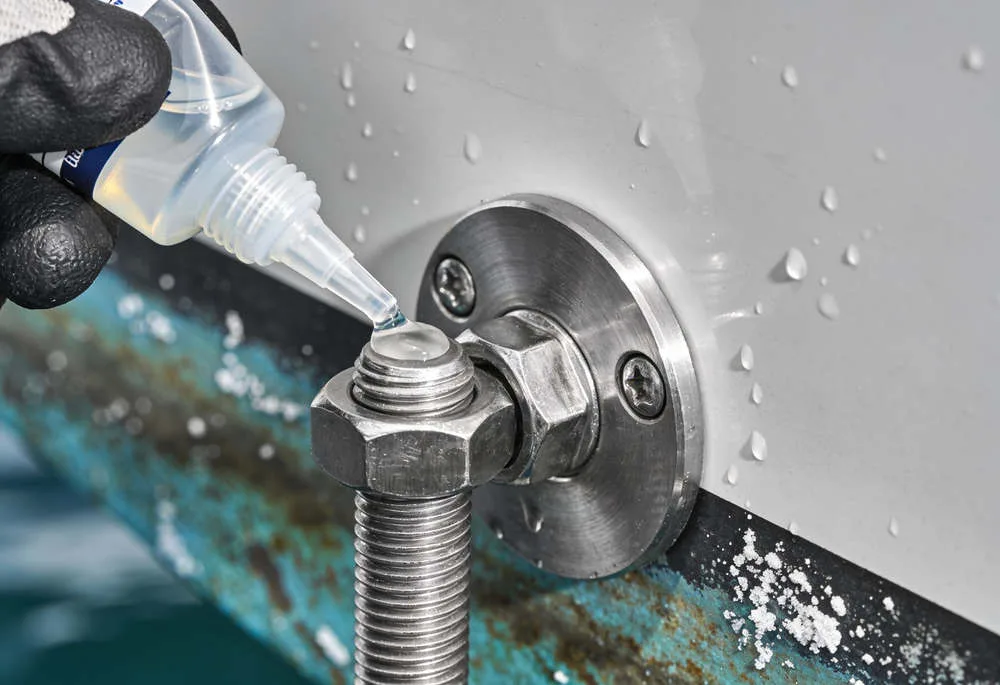
Rather than allowing stainless steel and aluminum to contact one another directly, Tef Gel creates a protective barrier between the metals.
That barrier helps reduce galvanic corrosion while also minimizing the tendency for threaded stainless components to gall during installation and future removal.
For marine technicians, applying the compound has become part of normal assembly rather than an optional extra.
The product is commonly used on:
- Threaded fasteners
- Bolts
- Screws
- Mast fittings
- Hinges
- Aluminum structures
- Stainless hardware
A few moments during installation can make future maintenance dramatically easier.
Choosing the right Tef Gel size
Not every project requires the same package size.
Someone replacing a few deck fittings may only need Tef Gel - TG-1 (20cc tube).
Boatyards, professional technicians, fleet operators, and owners performing larger refits often benefit from Tef Gel - TG-16 (16oz tub) because it supports repeated applications across many installations.
Selecting the right size depends on the amount of hardware being protected rather than choosing the largest container available.
Apply protection before corrosion begins
The best time to apply a corrosion barrier is during installation.
Waiting until corrosion becomes visible usually means oxidation has already started beneath the hardware.
Whenever stainless fasteners enter aluminum components, treat that connection as a potential corrosion point.
The same principle applies when reinstalling equipment after maintenance.
Cleaning the threads, inspecting the hardware, and applying fresh protection helps preserve the assembly for future service.
A small investment that protects expensive hardware
Marine electronics, towers, rails, hinges, and structural hardware represent significant investments.
Allowing corrosion to seize those components can lead to unnecessary labor, damaged parts, and expensive replacements that could often have been avoided.
Protecting each fastener during installation is inexpensive compared with repairing frozen hardware later.
Jupiter Boat Supply stocks the complete Tef Gel product line, making it easy to choose the right size whether you are servicing a few fittings or maintaining an entire fleet. The team understands which package works best for different applications and can help you order the product that matches your project.
Contact Jupiter Boat Supply to order the right Tef Gel for your project or call (561) 320-3522. A small amount of protection today can help prevent costly hardware replacement tomorrow.