For marine corrosion prevention in Jupiter, Ultra Tef-Gel offers something a generic PTFE thread paste may not: a purpose-built, waterproof barrier designed to keep saltwater electrolytes away from dissimilar metal interfaces. For technicians working around the Jupiter Inlet Lighthouse, that distinction matters when stainless hardware meets aluminum, especially on equipment that must still come apart years later.
If you are preparing for a haul-out or hardware installation near the Jupiter Riverwalk, call (561) 320-3522 or contact Jupiter Boat Supply for help choosing the right Tef-Gel size for the job.
For boats operating around DuBois Park, Jupiter Boat Supply supplies Ultra Tef-Gel for technicians and owners dealing with saltwater exposure, seized fasteners, and galvanic corrosion. The key difference is not simply that Tef-Gel contains PTFE. It is how the product is formulated to maintain a continuous protective barrier in demanding marine conditions.
PTFE in the Label Does Not Tell the Whole Story
PTFE is useful because it is chemically stable and provides excellent lubricating properties. However, products containing PTFE are formulated for different jobs.
Some PTFE pastes are designed primarily for thread sealing or lubrication. That does not automatically make them equivalent to a marine corrosion barrier engineered for long-term contact between dissimilar metals.
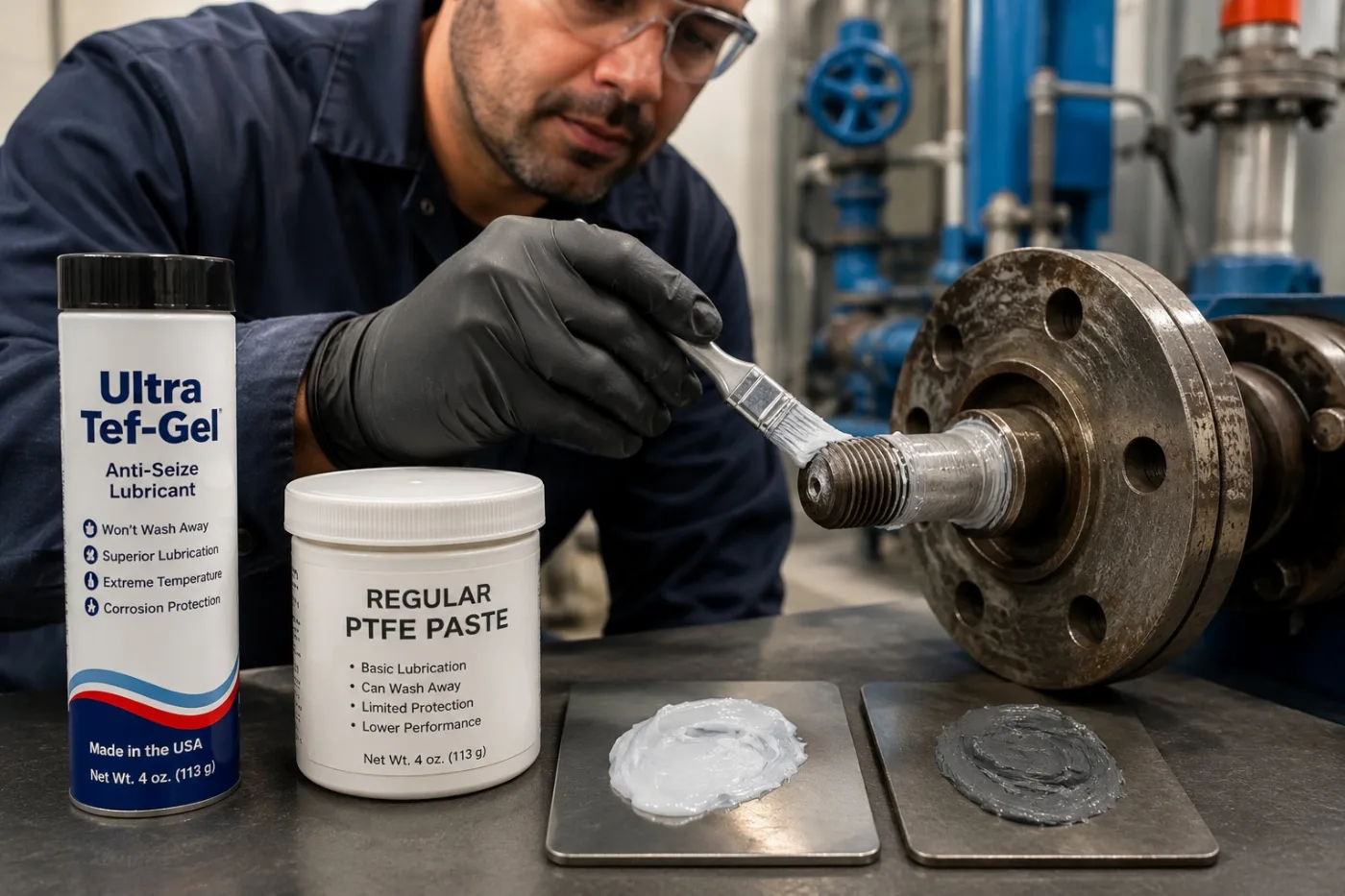
Ultra Tef-Gel contains 40 percent PTFE powder and no volatile solvents. According to the manufacturer, the absence of volatile solvents prevents the product from drying out and leaving spaces where moisture can enter the metal interface.
That matters on a boat because galvanic corrosion needs an electrolyte, such as saltwater, to complete the corrosion cell between dissimilar metals.
How Tef-Gel Interrupts Galvanic Corrosion
Consider one of the most common marine hardware combinations: a stainless steel bolt threaded into aluminum.
Add saltwater or salty moisture, and the two metals can form a galvanic cell. Over time, corrosion can attack the less noble metal, damage the surrounding surface, and make the fastener extremely difficult to remove.
Tef-Gel works by filling the spaces around the mating surfaces and helping prevent the electrolyte from reaching that interface.
It is important to be precise about one point. Tef-Gel does not electrically insulate hardware. In fact, the manufacturer states that it can be used on electrical contacts without increasing connection resistance. Its corrosion protection comes from excluding electrolytes from the interface rather than electrically isolating the components.
For a marine technician, that makes it useful anywhere water intrusion and dissimilar metals create a corrosion risk.
Where Should You Use Tef-Gel on a Boat?
The product is particularly useful during assembly, before corrosion has a chance to begin.
Common applications include:
- Stainless bolts threaded into aluminum
- Deck and rail hardware
- Mast fittings
- Hinges and mounting hardware
- Electrical contacts and connectors
- Closely fitted metal surfaces
- Hardware exposed to spray or salt air
Apply a thin coating to the mating surfaces and threads according to the product instructions. Complete coverage matters more than piling on excess material.
For electrical work, Tef-Gel can help protect connections from corrosion while maintaining electrical contact. For fasteners, it also acts as an anti-seize lubricant that can make future disassembly much easier.
What About Underwater Fittings?
Underwater and near-waterline hardware faces continuous moisture exposure, which makes corrosion prevention especially important.
Tef-Gel's water-resistant formulation makes it appropriate for many marine fittings and fasteners exposed to seawater. However, it should not be treated as a substitute for a required marine sealant, bedding compound, thread-locking product, or manufacturer-specified installation material.
Those products solve different problems.
Tef-Gel is primarily protecting the metal interface from corrosion and seizing. If an installation also requires structural bonding or a watertight seal through the hull, use the products specified for those functions as well.
Why Does Tef-Gel Last Better in Marine Service?
The formulation is designed to remain in place rather than dry out as volatile ingredients evaporate.
The manufacturer describes Tef-Gel as containing no volatile solvents, silicones, or petroleum solvents that could evaporate and leave pathways for saltwater to enter. The PTFE particles remain around the interface, providing the long-term barrier the product is designed to create.
A generic PTFE paste may work perfectly well for the application it was formulated for. The problem is assuming that every PTFE product provides the same galvanic corrosion protection.
Before using another paste as a substitute, check whether its technical data specifically addresses dissimilar-metal corrosion, prolonged saltwater exposure, washout resistance, and electrical connections.
If those claims are absent, the products are not truly equivalent for marine corrosion prevention.
Choose the Tube for Individual Jobs
For routine installations, a repower, electronics work, or a handful of deck fittings, the Tef Gel - TG-1 (20cc tube) provides a practical amount without buying more material than the job requires.
A little Tef-Gel goes a long way because the application only requires a thin, continuous coating.
The 20cc format also makes sense for boat owners who want corrosion protection available onboard for maintenance but do not use the product every day.
Choose the Bulk Tub for Repeated Shop Use
A busy yard or marine technician can go through small tubes quickly.
The Tef Gel - TG-16 (16oz tub) is better suited to repeated installations, larger refits, fleet maintenance, or shops routinely installing stainless hardware into aluminum components.
Buying the larger size is less about having a stronger version of the product and more about matching quantity to workload.
If you install hardware every week, bulk makes sense. If you are completing one project, the smaller tube may be all you need.
Pay for Corrosion Prevention Before Paying for Seized Hardware
Tef-Gel usually costs more than a generic paste, but the product cost is small compared with the labor involved in drilling out a seized stainless fastener, repairing corroded aluminum, or dismantling hardware that should have come apart cleanly.
For marine technicians, that is the real value calculation. The right corrosion barrier adds only a small step during installation and can save substantial work during future maintenance.
For help sizing Tef-Gel to your next marine installation or maintenance job, call (561) 320-3522 or reach out to Jupiter Boat Supply for product guidance.